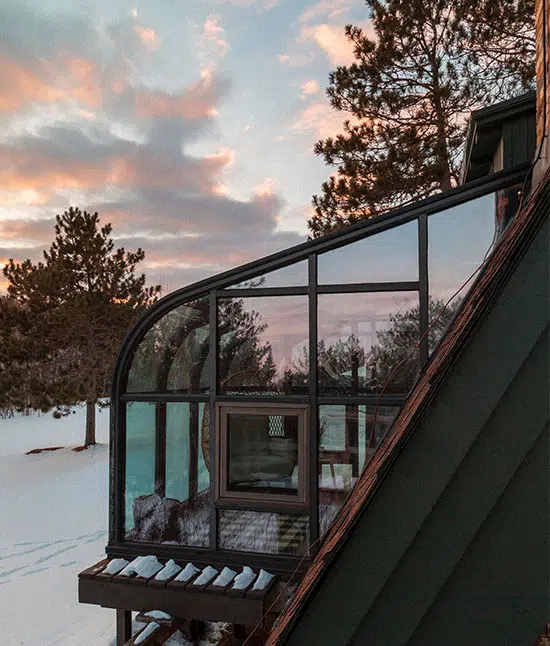
What Makes a Luxury Greenhouse Truly High-Performance Through a Canadian Winter?
Key Takeaways
- A high-performance greenhouse is engineered to hold steady temperatures, light, and humidity through every season, including a deep Canadian January.
- Glazing has the biggest effect on winter performance, so insulated, low-e glass and well-sealed panels are worth prioritizing.
- Framing should be rated for your region's snow and wind loads, with details that limit heat loss through the metal itself.
- Heating, thermal mass, passive solar design, and automated ventilation work together to keep plants healthy while keeping energy use in check.
- Siting, orientation and the choice between an attached or freestanding design shape how much winter light and comfort you'll enjoy.
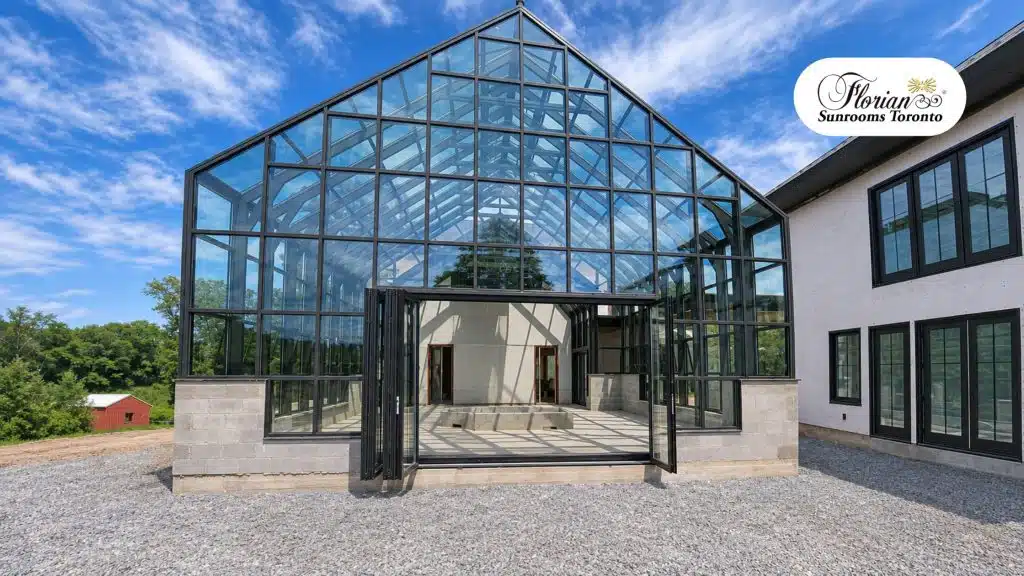
A high-performance greenhouse is a glass growing space engineered to keep temperature, light, humidity, and airflow stable in every season, so plants keep growing when the garden outside is frozen. Our luxury greenhouses are designed around that idea, pairing elegant architecture with the engineering a Canadian winter asks for.
At Florian Sunrooms, we've spent more than 70 years designing glass structures for Canadian homes, and winter is where a well-built greenhouse shows its value. This guide walks through the features that make a luxury greenhouse perform from November to March, so you know exactly what to look for when you start planning your own.
What Separates a High-Performance Greenhouse From a Standard Kit?
Most greenhouse kits are built for the growing season. They're lightweight and quick to assemble, which makes them ideal for starting seedlings in spring or sheltering tomatoes through a cool September night.
A high-performance greenhouse is designed for a longer job. Every component, from the glass to the foundation, is chosen to hold heat in and manage moisture, so plants stay healthy through months of short, cold days.
The difference shows up in four areas: glazing, framing, climate control, and design. When all four work together, you get a space that stays bright and comfortable in January and costs far less to heat than a structure that was never meant for winter.
Glazing: The Biggest Factor in Winter Performance
Glazing is the glass or clear panelling that forms the walls and roof of a greenhouse. Because it covers almost the entire structure, it decides how much light comes in and how much heat escapes.
Insulated Glass vs. Polycarbonate
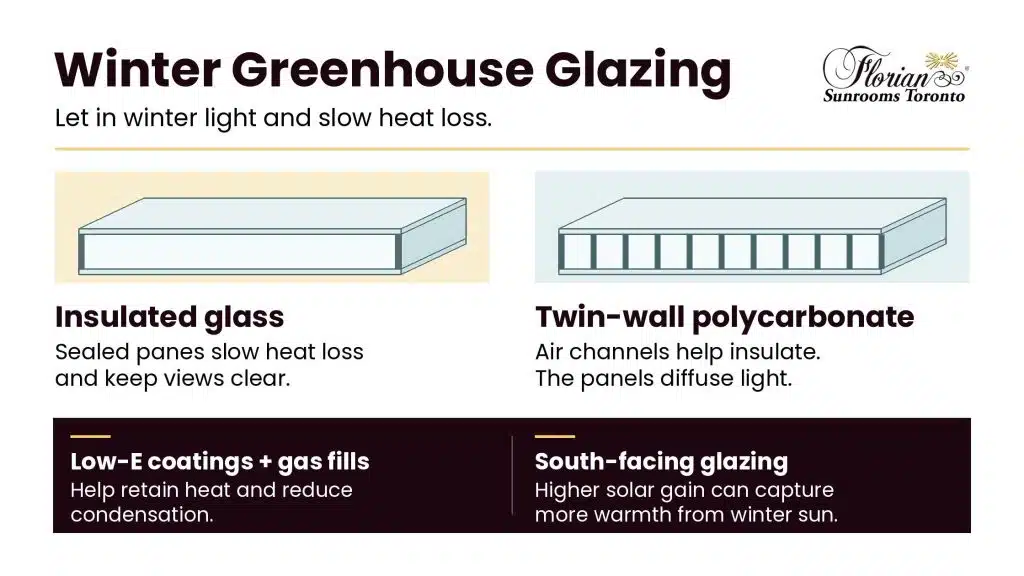
Insulated glass units use two or more panes sealed together with a layer of air or gas in between. That sealed gap slows heat loss far more than a single pane, and tempered glass adds strength and safety if a panel is ever struck.
Twin-wall polycarbonate is a lighter plastic panel with hollow channels that trap air. It insulates well for its weight and is common on hobby greenhouses, though it diffuses the view and can yellow with years of sun. For a luxury greenhouse that doubles as a beautiful room, insulated glass keeps the clear, open look most homeowners are hoping for.
Low-E Coatings and Gas Fills
Natural Resources Canada explains that low-emissivity coatings and inert gases between the panes improve insulation and reduce condensation on the glass. A low-e coating is a microscopically thin layer that reflects heat toward its source, so warmth stays inside on a cold night.
Solar gain matters too. NRCan research on high-solar-gain glazing found that pairing glazing types by orientation, with high-solar-gain glass on the south and low-solar-gain glass on the north, can produce the best results. For a greenhouse, that means letting the winter sun in on the south side while protecting the cooler north side. Our guide to choosing the right glass for your sunroom or solarium covers these options in more detail.
Framing Built for Snow, Wind and Deep Cold
The frame carries the weight of the glass, the snow that settles on the roof, and the force of winter wind. In much of Canada, a greenhouse roof needs to support heavy, wet snow for weeks at a time, so the frame should be engineered and rated for the loads in your area.
Aluminum is a popular choice for luxury greenhouses because it's strong, slim, and resists corrosion. The slim profile also means more of the structure is glass, which lets in more winter light.
Look for framing that limits heat loss through the metal itself. Thermally broken frames use an insulating barrier inside the profile, which keeps the inside face of the frame warmer and helps reduce frost and condensation along the joints. Tight seals and quality gaskets complete the picture by stopping drafts where glass meets frame.
Every Florian greenhouse is engineered for Canadian snow loads, wind, and deep-freeze temperature swings, so the structure stays solid and weathertight year after year.
Heating, Thermal Mass and Passive Solar Design
Even the best-insulated greenhouse needs a plan for its coldest nights. A high-performance design combines a reliable heat source with features that store free solar energy during the day.
Supplemental Heat
Electric heaters, hydronic systems, and extensions of the home's own heating are all common options. A thermostat controls the system, holding the temperature your plants prefer without heating more than necessary.
Thermal Mass and Stored Solar Heat
Thermal mass refers to materials such as stone, concrete, brick, and water that absorb heat during the day and gradually release it as temperatures fall. In a greenhouse, these materials can help moderate temperature changes by storing some of the warmth gained from winter sunlight.
Natural Resources Canada explains how passive solar design uses building orientation, glazing, and thermal mass to capture and store solar energy. For homeowners, this might involve incorporating a concrete floor or masonry features where they can receive direct sunlight. Thermal mass can help reduce temperature fluctuations, but it doesn't replace insulation or supplemental heating during extended periods of freezing weather.
Our passive solar collectors apply the same thinking to homes and greenhouses, capturing the sun's warmth and putting it to work. Florian's exclusive Sierra design is also up to 200% more energy efficient than competitors, which helps keep winter heating costs down.
Ventilation and Climate Control for Every Season
Ventilation sounds like a summer concern, yet it's just as important in winter. Plants release moisture, and warm, humid air meeting cold glass creates condensation that can lead to mould and fungal disease if it lingers.
A high-performance greenhouse manages this with a mix of roof vents, side vents and circulation fans. Automated vent openers and humidity controls respond to conditions on their own, opening briefly on a sunny afternoon to release excess heat and moisture, then closing to hold warmth as the evening cools.
The same system protects your plants in July. Our guide on how to keep a greenhouse cool in summer shows how shading, airflow, and vent placement keep summer temperatures in a healthy range.
Siting, Orientation and Winter Light
Winter light is precious, so where your greenhouse sits matters as much as how it's built. In Canada, a site with clear southern exposure gives you the most sun when the days are shortest, and an east-west orientation for the long side of the structure captures light across the whole day.
Watch for trees, fences and neighbouring buildings that cast long shadows when the sun sits low in December. A spot that looks sunny in June can lose hours of light in winter.
Your local climate shapes the plan as well. Canada's Plant Hardiness Zones map is a helpful starting point for understanding the conditions your greenhouse will face. Our article on how a backyard greenhouse extends your growing season explains how a well-sited structure adds weeks of growing time on both ends of the year.
A solid, level foundation finishes the job. An insulated slab or perimeter footing keeps frost from shifting the structure and helps stop cold from rising through the floor.
Attached or Freestanding: Designing Around Your Home
A luxury greenhouse can stand on its own in the garden or connect directly to the house. Each approach has its own advantages, and the right choice depends on how you plan to use the space.
- An attached greenhouse shares a wall with your home. That shared wall adds warmth and shelter, and you can step in for fresh herbs or a morning coffee without putting on boots.
- A freestanding greenhouse becomes a garden feature in its own right. It gives you full sun on every side and more freedom with size, shape, and placement.
Many homeowners treat an attached greenhouse as part of a larger renovation. Our attached greenhouse additions are designed to match the architecture of the home, so the new space looks like it was always there. You can also browse our greenhouse gallery for design ideas, from classic peaked roofs to contemporary lean-to styles.
What Can You Grow in a High-Performance Greenhouse Through Winter?
Cool-season vegetables are well suited to winter greenhouse gardening. Leaf lettuce, spinach, kale, Swiss chard, and certain Asian greens can grow in cooler conditions than tomatoes or peppers. According to Foodland Ontario's seasonal availability guide, greenhouse-grown lettuce is produced year-round in Ontario, showing how protected growing environments can extend production through the colder months.
Winter sunlight is still a limiting factor, even for cold-tolerant crops. Starting plants in late summer or early autumn gives them time to establish before shorter days slow their growth. Homeowners hoping to harvest throughout winter may also need supplemental lighting and heating, depending on the crops and greenhouse conditions.
Warm-season crops such as tomatoes and peppers need more heat and light, so most growers save them for spring. A high-performance greenhouse also makes a lovely winter home for citrus, tropical plants, and overwintering perennials. Planning helps you sidestep the common greenhouse mistakes homeowners make and set up the space for success from day one.
Build a Luxury Greenhouse That Performs All Year
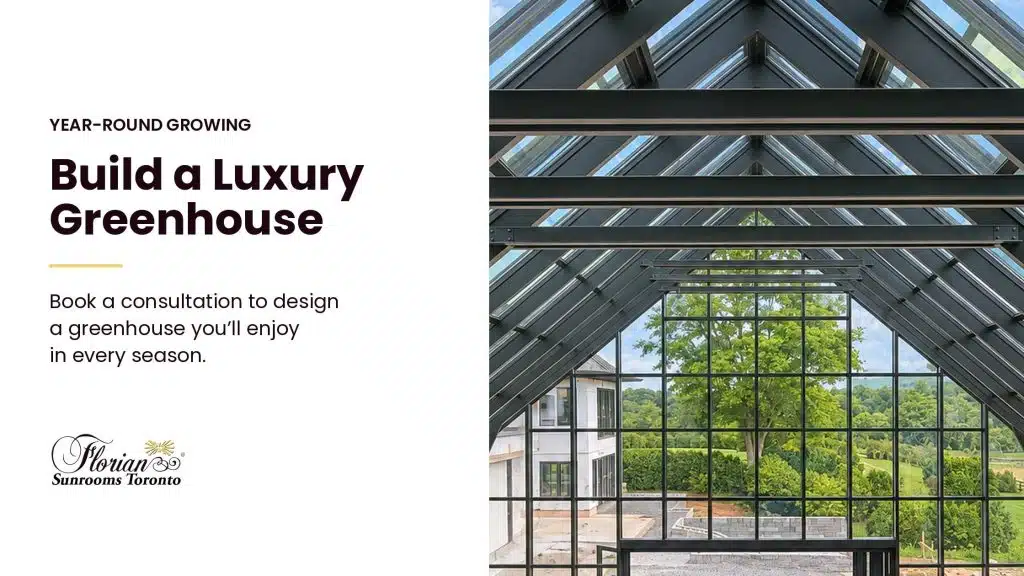
A luxury greenhouse should feel as good in January as it does in June: bright and warm, with plenty of green growing while the yard outside rests under snow. Insulated glazing, rated framing, smart climate control, and thoughtful siting are what make that possible.
Florian Sunrooms designs and builds high-performance greenhouses for Canadian homeowners, with custom design and full support from the first sketch through permits, installation, and beyond. Ready to plan a greenhouse you'll enjoy every season? Book a greenhouse consultation, and our team will help you design the right space for your home.
Frequently Asked Questions
What Is a High-Performance Greenhouse?
A high-performance greenhouse is a glass growing structure engineered to keep temperature, light, humidity, and airflow stable in every season. It typically combines insulated glazing, framing rated for local snow and wind loads, a reliable heat source, and automated ventilation. Together, these features let plants keep growing through a dry, cold winter while keeping heating costs reasonable. A standard kit is usually built for spring to fall use, while a high-performance design is planned from the start to perform in January as well as July.
Can You Use a Glass Greenhouse in a Canadian Winter?
Yes, a glass greenhouse can be used through a Canadian winter when it's designed for cold conditions. The key features are insulated glass with low-e coatings, a frame rated for your area's snow load, tight seals, a dependable heat source, and ventilation that controls humidity. Siting matters too, since southern exposure gives you the most winter sun. With those pieces in place, many homeowners grow greens, herbs, and citrus through the coldest months and enjoy the space as a bright winter retreat.
How Do You Keep a Greenhouse Warm in Winter?
Start with the structure: insulated glazing, sealed joints, and an insulated foundation hold heat in. Then add a thermostat-controlled heat source, such as an electric heater or a hydronic system, to cover the coldest nights. Thermal mass like stone, concrete, or water barrels stores daytime solar heat and releases it after dark. Passive solar design, with steeply angled south-facing glass, captures as much free winter sun as possible. Automated vents also help by venting moisture without letting precious warm air escape.
Is an Attached Greenhouse Better Than a Freestanding One?
Each design suits different goals. An attached greenhouse shares a wall with your home, which adds warmth, reduces heating needs, and makes the space easy to reach on a snowy morning. A freestanding greenhouse offers sun on every side, more freedom in size and placement, and a striking feature in the garden. If you plan to use the greenhouse as an everyday living space as well as a growing space, an attached design is often the more practical choice for a Canadian home.