How to Keep a Greenhouse Cool in Summer Without Harming Your Plants
Key Takeaways
- Keeping a greenhouse cool in summer is about creating environmental balance, not simply reducing heat. Proper airflow, ventilation, humidity control, and shading all work together to protect plant health and improve long-term growing success.
- Ventilation is one of the most important greenhouse cooling strategies. Roof vents, side vents, exhaust fans, and automated vent openers help remove trapped heat while supporting healthier airflow and reducing excess humidity.
- Strategic shade systems help prevent overheating without sacrificing healthy plant growth. Exterior shade cloth, retractable shading, and thoughtful natural shade planning can reduce dangerous solar gain during peak summer temperatures.
- Greenhouse materials directly affect summer performance. Polycarbonate panels, diffused glazing, thermal mass materials, and climate-conscious structural design can significantly improve temperature stability and reduce heat stress.
- Professionally engineered greenhouses often outperform DIY builds during extreme summer conditions because ventilation, airflow, glazing, orientation, and environmental control are designed together from the beginning for healthier long-term growing conditions.
There is a moment every greenhouse owner knows well. Spring feels like a possibility. Light pours in, seedlings stretch, humidity feels manageable, and your greenhouse becomes exactly what you imagined. Then summer arrives, and suddenly that beautiful glass sanctuary can feel less like a growing environment and more like a pressure cooker.
Too much heat can quietly sabotage everything. Leaves scorch. Growth slows. Pollination struggles. Moisture spikes. Fungal issues creep in. Plants that should thrive begin surviving.
For gardening-focused homeowners, especially in Canada where seasonal extremes are part of the deal, summer greenhouse management is not simply about sunlight. It is about balance. It is about protecting months of work while preserving the full potential of your plants, structure, and seasonal harvest goals.
The right greenhouse should not trap heat so aggressively that it works against your plants. It should regulate, vent, cool, and adapt. Even the Royal Horticultural Society notes that without proper ventilation and shading, greenhouse temperatures can rise rapidly during summer, putting plant health at serious risk.
That is where smart structural planning matters. At Florian Sunrooms, greenhouse design goes beyond aesthetics. A high-performance greenhouse is engineered to support healthier plants through strategic ventilation, airflow, and environmental control, helping homeowners create spaces that work beautifully even during peak summer temperatures while maintaining long-term gardening comfort.
Inside This Guide
- How excessive summer heat affects greenhouse plant health and productivity
- Why ventilation, airflow, and shading are essential for temperature control
- The greenhouse materials and glazing options that help regulate summer heat
- Smart cooling strategies that improve long-term growing performance
- Why professionally engineered greenhouse design often outperforms DIY builds
When Sunlight Becomes Too Much of a Good Thing
Greenhouses are built to maximize solar gain. That is the point. But in summer, especially during extended heat waves, that same strength can quickly become a liability.
Interior greenhouse temperatures can rise dramatically higher than outdoor conditions, particularly when ventilation is poor. This can lead to:
- Heat stress that slows photosynthesis
- Wilting despite regular watering
- Flower drop or failed fruit production
- Increased pest activity
- Dangerous humidity spikes that encourage mildew and fungal disease
For DIY greenhouse enthusiasts, this often comes as a surprise. More sun does not always mean more growth. In fact, without proper intervention, excessive solar gain can undermine the exact productivity greenhouse owners are working so hard to create.
A productive greenhouse requires controlled energy, not relentless exposure. Strategic cooling preserves growth consistency, plant resilience, and gardening success through the hottest stretches of summer.
Ventilation First: The Cooling Essential Too Many Homeowners Underestimate
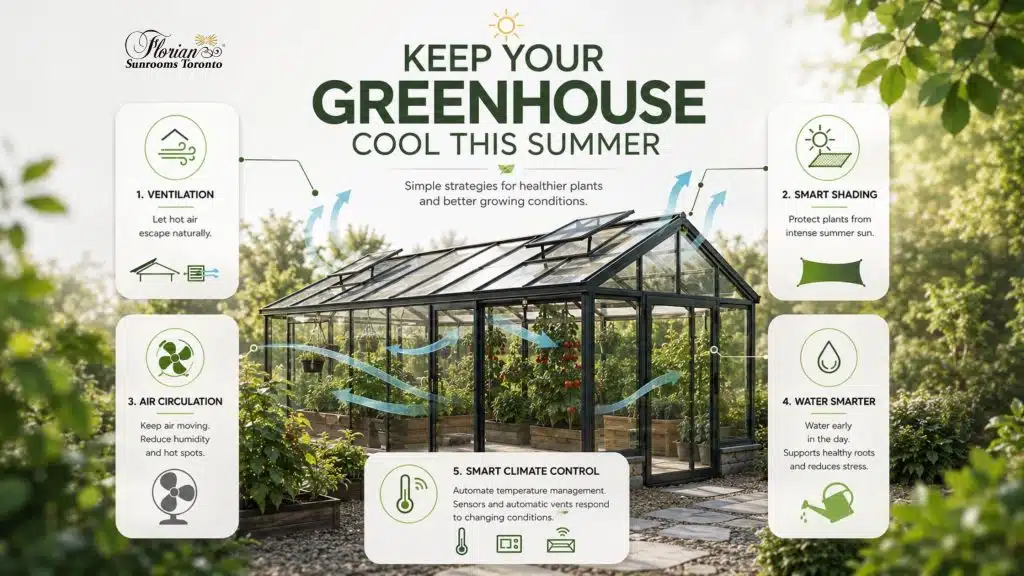
If greenhouse cooling had a foundation, it would be ventilation. Without proper air exchange, heat accumulates rapidly. Ventilation allows hot air to escape while drawing cooler air inward, stabilizing temperatures and reducing excess moisture. Clemson Cooperative Extension emphasizes that effective greenhouse ventilation is one of the most important factors in reducing heat buildup and supporting healthier growing conditions.
Roof Vents: Let Heat Escape Where It Naturally Rises
Because heat rises, roof vents are one of the most effective passive cooling tools available. Operable ridge vents or automated roof windows create an escape path for trapped hot air while reducing temperature layering.
Side Vents: Cross Breeze Changes Everything
Strategically placed side vents encourage cross ventilation, which creates a natural airflow cycle. This movement reduces stagnant heat pockets and can significantly improve temperature consistency while also discouraging fungal buildup.
Automated Vent Openers: Smart Cooling Without Constant Monitoring
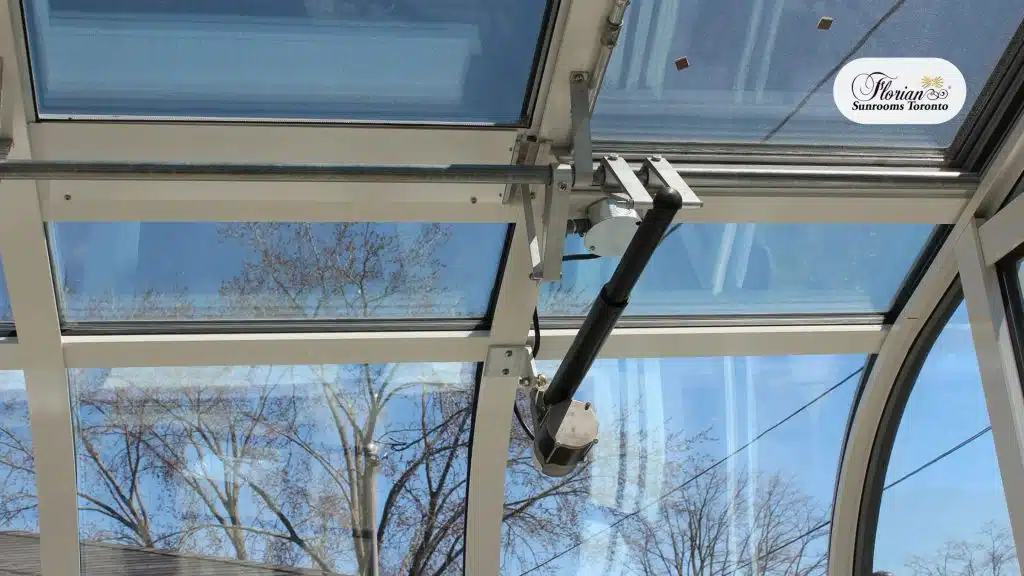
Temperature-sensitive vent openers automatically respond to heat changes, making them ideal for homeowners who cannot manually adjust conditions throughout the day, especially during sudden midday temperature spikes.
This is where thoughtful greenhouse engineering matters. Florian Sunroom’s approach to custom backyard greenhouses prioritizes practical ventilation as much as visual elegance, helping create structures that support both beauty and plant performance through every Canadian growing season.
Shade Is Not the Enemy, It Is a Survival Strategy
Many greenhouse owners fear reducing sunlight. In reality, strategic shade can be one of the smartest greenhouse cooling tips available.
Plants need light, but excessive direct solar radiation can damage tissues and overheat root zones. Cooling is not about reducing opportunity. It is about preserving healthy photosynthesis under safer, more controlled conditions.
Exterior Shade Cloth
Shade cloth placed externally blocks solar gain before heat enters the structure. This is often more effective than interior shading because it prevents greenhouse temperature escalation at the source.
Retractable Shade Systems
For homeowners wanting flexibility, retractable systems allow light adjustment depending on crop type, season, or daily conditions, making them especially useful for changing summer weather.
Natural Shade Planning
Trees, pergolas, or adjacent structures can sometimes provide partial cooling support, though this must be carefully balanced to avoid reducing critical growing light.
Shading is not about deprivation. It is about moderation. In summer greenhouse success, controlled sunlight often outperforms constant intensity.
Fans: Because Airflow Is About More Than Temperature
Even with ventilation, airflow inside the greenhouse matters. Fans do more than cool. They create movement that helps plants transpire properly, reduces fungal risk, strengthens stems, and prevents humidity pockets. The University of Minnesota Extension also highlights early summer heat preparation, including airflow planning and temperature management, as essential for protecting greenhouse productivity.
Horizontal Airflow Fans
These circulate air evenly throughout the structure, preventing “dead zones” where heat lingers and supporting more uniform environmental conditions.
Exhaust Fans
When paired with intake vents, exhaust systems actively remove hot air and pull in cooler replacement air, creating stronger cooling efficiency during extreme heat.
Oscillating Fans
Smaller greenhouses or homemade greenhouse setups can often benefit from well-positioned oscillating fans for affordable circulation support and healthier moisture distribution.
Good airflow is not optional in summer. It is structural insurance for plant health, productivity, and environmental stability.
Water Is Powerful, But Moisture Mismanagement Can Backfire
Many homeowners respond to heat by watering more aggressively. While hydration matters, overwatering and humidity spikes can create entirely new problems.
Morning Watering Wins
Watering early helps plants absorb moisture before peak temperatures while reducing overnight dampness that encourages mold and unnecessary fungal risk.
Misting Systems
Evaporative cooling through misting can reduce temperatures, but it must be carefully monitored. Too much mist can elevate humidity beyond healthy levels.
Drip Irrigation
Targeted watering keeps root systems hydrated without excessively saturating surrounding air, making it one of the most effective cooling-friendly irrigation methods.
Humidity Monitoring
Greenhouse cooling is not just temperature management. It is environmental balance. USDA greenhouse climate research consistently shows that temperature alone is not enough. Humidity balance and vapor pressure also play a critical role in preventing plant stress and disease.
Florian Sunroom’s experience in climate-controlled solariums and greenhouse structures reinforces a critical truth: cooling systems should work in harmony with moisture control, not against it for healthier long-term plant resilience.
The Glazing You Choose Can Make or Break Summer Performance
Not all greenhouse materials behave the same under summer sun. Glazing directly impacts heat retention, UV filtration, insulation, and cooling potential. Material choice can dramatically influence whether your greenhouse feels manageable or overwhelming during summer peaks, and one of the first steps for greenhouse homeowners is understanding how those material choices directly affect long-term plant health and climate control.
Polycarbonate Panels
These often provide better temperature moderation than traditional glass by diffusing sunlight and reducing intense heat concentration, while also offering stronger insulation benefits and improved durability for fluctuating Canadian weather.
Tempered Glass
Beautiful and highly durable, but proper ventilation and shading become especially important to prevent dangerous overheating, particularly during prolonged heat waves where solar gain can quickly intensify internal temperatures.
Diffused Glazing Options
These help distribute sunlight more evenly, reducing hotspots while maintaining plant-friendly brightness and more stable environmental conditions, which can support healthier growth across a wider variety of plants.
For homeowners designing or upgrading a greenhouse, glazing is not just an aesthetic choice. It is a climate strategy with daily performance implications.
Thermal Mass: The Quiet Hero of Temperature Stability
One of the smartest natural cooling approaches often gets overlooked because it is subtle. Thermal mass materials like stone, brick, or water barrels absorb heat during the day and release it slowly as temperatures cool.
This helps reduce dramatic daytime spikes while moderating nighttime drops, creating more consistent internal growing conditions for sensitive crops.
Examples include:
- Water barrels along greenhouse walls
- Stone flooring
- Masonry features
- Raised beds with thermal retention materials
Thermal mass does not replace ventilation, but it creates a more stable internal climate while reducing temperature volatility.
For homeowners exploring smarter home improvement solutions, this strategy often offers long-term performance benefits with relatively low maintenance and stronger seasonal efficiency.
Smart Greenhouse Cooling Is Getting Smarter
Modern greenhouse cooling has evolved far beyond manually opening a window and hoping for the best.
Automated solutions can include:
- Smart thermostats
- Temperature-triggered vent systems
- Solar-powered exhaust fans
- Automated shade controls
- Humidity sensors
- App-connected environmental monitoring
These systems reduce guesswork and allow greenhouse owners to respond proactively instead of reactively. They also support more precise temperature regulation during unpredictable weather shifts.
For serious gardeners, automation is not excess. It is precision that protects both crops and long-term greenhouse investment.
Structural Design Matters More Than Most People Realize
Cooling a poorly designed greenhouse often feels like constantly fixing symptoms instead of solving the problem.
Orientation, roof pitch, vent placement, material selection, and structural dimensions all influence heat retention. According to University of Maryland Extension resources, greenhouse orientation, ventilation design, and structural planning all significantly influence long-term temperature regulation.
A greenhouse positioned incorrectly or built without airflow planning may struggle no matter how many fans or misters you add later.
This is why investing time upfront to avoid costly greenhouse design errors can dramatically improve long-term gardening success while reducing future retrofitting costs.
Florian Sunroom’s decades of greenhouse expertise emphasize this from the beginning: true greenhouse performance starts with the structure itself, not temporary cooling fixes.
DIY Greenhouse vs. Professionally Engineered Performance
There is undeniable charm in a DIY greenhouse project. For hobby growers, homemade greenhouse builds can absolutely be rewarding.
But summer heat often exposes the difference between improvised construction and climate-conscious engineering.
DIY limitations may include:
- Insufficient roof venting
- Poor cross ventilation
- Incorrect glazing choices
- Weak thermal regulation
- Limited structural durability
For gardeners with serious seasonal goals, investing in a customized solution often delivers greater longevity, healthier plants, and fewer corrective costs.
When homeowners explore custom enclosure designs, they often discover that strategic design choices outperform quick fixes, especially under prolonged summer heat stress.
Seasonal Gardening Should Feel Expansive, Not Exhausting
A greenhouse should expand your growing possibilities, not create constant environmental stress. Whether your goals involve tomatoes, orchids, herbs, tropical plants, or year-round experimentation, cooling strategy is what protects your investment during peak summer. Seasonal greenhouse guidance from the RHS also recommends summer-specific adjustments like shading, dampening pathways, and airflow monitoring to reduce heat pressure during peak growing months.
The best greenhouses do not simply collect sunlight. They manage it intelligently and adapt to environmental shifts.
That means combining:
- Ventilation strategies
- Shade systems
- Smart airflow
- Humidity management
- Material performance
- Structural expertise
Frequently Asked Questions
How hot is too hot for a greenhouse in summer?
Most greenhouse plants begin experiencing stress when temperatures consistently rise above 85°F to 90°F (29°C to 32°C), though exact tolerances vary by plant type. Excessive heat can slow photosynthesis, increase moisture loss, reduce pollination success, and encourage fungal issues, making proper ventilation and airflow essential for maintaining healthier growing conditions.
What is the best way to cool a greenhouse naturally?
Natural greenhouse cooling usually starts with proper ventilation and airflow. Roof vents, side vents, shade cloth, cross ventilation, and thermal mass materials help reduce heat buildup without relying entirely on powered systems. Many homeowners also combine passive cooling methods with strategic watering schedules and airflow fans for stronger overall environmental balance.
Do greenhouse fans really make a difference in summer?
Yes, greenhouse fans play a major role in summer temperature and humidity management. Fans improve airflow circulation, prevent stagnant heat pockets, reduce fungal risks, strengthen plant stems, and support healthier transpiration. Even smaller hobby greenhouses can benefit significantly from properly positioned oscillating or horizontal airflow fans during hot weather.
What greenhouse material stays coolest in summer?
Polycarbonate panels are often preferred for summer greenhouse performance because they diffuse sunlight, reduce intense heat concentration, and provide stronger insulation than traditional glass alone. Diffused glazing systems can also help minimize hotspots while maintaining healthy light exposure for plants throughout fluctuating Canadian summer conditions.
Is a professionally designed greenhouse better for temperature control?
Professionally engineered greenhouses are typically designed with ventilation, glazing, airflow, orientation, and structural cooling strategies integrated from the beginning. This often creates more stable growing conditions during summer heat waves compared to many DIY greenhouse builds, which may struggle with airflow limitations, poor vent placement, or excessive solar heat retention.
Your Greenhouse Should Work With Nature, Not Against It
Canadian summers can be intense, but they do not have to compromise greenhouse success. The right greenhouse cooling strategy is ultimately about creating balance. Sunlight should nurture, not scorch. Humidity should support, not suffocate. Design should protect, not complicate. As growing seasons continue shifting with broader climate changes, USDA Climate Hubs increasingly emphasize adaptive environmental control as part of smarter, more resilient gardening.
Understanding how to regulate heat, airflow, moisture, and structural performance can make the difference between a greenhouse that merely survives summer and one that continues thriving through it.
And for those ready to build or upgrade with long-term performance in mind, Florian Sunrooms offers more than greenhouse structures. They deliver thoughtfully engineered environments designed for beauty, ventilation, and healthier growth.
If you are ready to create a greenhouse that performs as beautifully as it looks, now may be the time to book a greenhouse consultation and design a structure built for every season, every harvest, and every climate challenge.