How to Choose the Right Sunroom Kit for Your Home
A sunroom is one of the few home improvements that pays you back every single day. More natural light, more usable square footage, and a quiet spot to enjoy your yard in any season. But with so many products on the market, choosing the right sunroom kit can feel overwhelming. Size, materials, glass quality, climate performance, and installation method all factor into the final decision, and getting any one of them wrong can mean a room that's uncomfortable, expensive to maintain, or simply doesn't match how you actually want to use it.
At Florian Sunrooms, we've spent years helping Canadian homeowners plan and install sunrooms and solariums that hold up to real winters and real summers. This guide is built around the questions we hear most often from customers, so you can walk into your own sunroom kit decision with confidence.
Types of Sunroom Kits
Not all sunrooms are built for the same purpose, and the type you choose should match your climate and how many months of the year you plan to use the space.
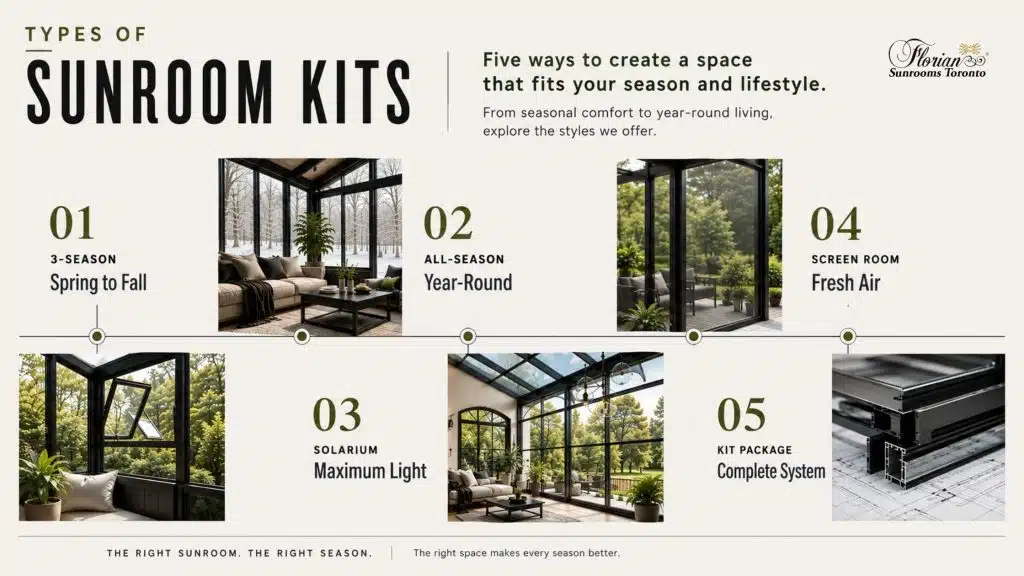
- 3-season sunrooms: Designed for spring through fall, these rooms typically use lighter framing and basic glazing. They're a budget-friendly way to add living space, but they aren't meant to be heated through a Canadian winter.
- All-season sunrooms: Built with insulated roof systems, upgraded glazing, and tighter construction, all-season rooms can be heated and cooled like the rest of your home. If you want a fully insulated room you can use year-round, this is the category to look at.
- Solariums: Characterized by glass roofs and expansive glazing, solariums maximize natural light and often feature architectural details like natural arches or curved rooflines. If you're weighing sunroom kits Canada-wide options, take a look through our solarium kits to see how much light these designs bring in.
- Screen rooms: A simpler, more affordable option that keeps bugs out and adds shade without the full weathertight envelope of a glazed sunroom.
- Sunroom kit packages: We build our packages with stacking windows, roof systems, and structural components engineered to work together, so design and installation stay simple from day one.
Getting clear on these categories first will narrow down everything else in this guide, since the materials, warranty terms, and installation complexity all vary by type.
Key Features and Materials
The materials behind a sunroom kit determine how it performs in extreme heat, heavy snow, and everyday wear. Here's what we tell every homeowner to check for.
Framing
Aluminum is the industry standard for sunroom framing because it resists corrosion, requires little maintenance, and is strong relative to its weight. Look for reinforced aluminum framing rather than lighter-gauge alternatives, especially if you're in a region with heavy snow loads.
Roofing
Insulated roof panels are one of the biggest differentiators between a basic 3-season add-on and a true all-season room. These panels combine an insulating core with weather-resistant facings to reduce heat loss in winter and heat gain in summer. Some of our kits also offer translucent roof glazing, which brings in daylight while still providing insulation. It's a nice middle ground between a solid roof and a full glass ceiling.
Glass
Glazing quality affects comfort, energy bills, and UV exposure more than almost any other component. Double or triple-pane, low-E coated glass will significantly outperform basic single-pane glazing in a Canadian climate. If you're unsure what to look for, our guide on choosing the right glass breaks down the differences between glazing options and how they affect temperature control and comfort.
Structural details
Some of our premium sunroom kits include handcrafted wooden beams or laminated beams for a more custom, high-end look, while structural elements can also be finished with epoxy resin coatings to extend their lifespan. If your home has a distinct architectural style, these details help the addition feel intentional rather than bolted on.
Add-ons
Depending on how you plan to use the space, features like aluminum canopies, carports, or patio covers can be paired with a sunroom project to extend your outdoor living even further.
Customization and Design Options
One of the biggest advantages of a modern, customizable prefab sunroom kit is that prefab no longer means one size fits all. Customization typically includes:
- Sizing and layout: We configure kits to fit an existing deck or patio footprint, or scale them up for a larger addition.
- Mounting style: Depending on your home's structure, a sunroom can be roof-mounted, wall-mounted, or soffit-mounted. Our team assesses your home's framing before recommending an approach.
- Window configuration: Options like 4-track stacking windows or 4-track sunroom windows let you fully open the space in summer and seal it tight in winter.
- Finishes and colours: Custom colours and finishes on framing and trim let the sunroom match your home's existing exterior instead of looking like an obvious add-on.
- Architectural details: Skylights, natural arches, and varied roof styles allow for a more distinctive design than a standard box addition.
Because these choices affect both function and cost, we always work through them with homeowners as part of a real design consultation, not just an off-the-shelf order. Our broader home renovation solutions can walk you through layout and finish options as part of the planning process, and many of our customers treat the sunroom as part of a larger home extensions and additions project rather than an isolated purchase.
Durability and Warranty
A sunroom is a long-term investment, so durability and warranty coverage deserve as much attention as style.
Performance ratings
Ask about snow load and wind resistance ratings for any kit you're considering, especially if you live somewhere with harsh winters. A room that isn't engineered for local conditions can develop leaks, sagging, or structural issues within a few years.
Manufacturer reputation
Established brands like BetterLiving™ Sunrooms, Craft-Bilt, and Grand Vista Sunrooms have track records worth researching. Roof systems, glazing, and framing from a manufacturer with a long history are more likely to hold up, and to have parts available years down the line. We work with these manufacturers because we trust what they build.
Warranty terms
Look closely at what's actually covered. Some warranties cover framing and structural components for decades but limit glass or seal coverage to a much shorter window. Understanding the fine print now prevents surprises later, and we're happy to walk you through exactly what's included before you commit to anything.
Permanent protection vs. seasonal use
If you want a room that offers permanent protection from the elements, not just a screened or 3-season space, confirm that the roof system, glazing, and insulation are all rated for continuous, all-season use.
Patio covers and solariums
These structures face slightly different durability considerations than an enclosed sunroom, since they're more exposed. If you're comparing a solarium against a fully enclosed all-season room, ask us directly how warranty terms differ between the two.
Installation Process
Installation is where the value of a good kit shows up, or falls apart if it's rushed. Here's how we walk homeowners through it.
- Design and consultation: We start with a site visit to assess your home's structure, mounting options (roof, wall, or soffit), and any local permitting requirements.
- Site preparation: This includes preparing the foundation, whether that means pouring a new slab, building on an existing patio, or reinforcing a deck.
- Foundation and framing: The aluminum frame is assembled and secured, followed by structural elements like aluminum decking or railing if the sunroom sits above grade.
- Customization and production: Because most kits are made to order, glazing, finishes, and window configurations are manufactured to your agreed specifications before installation begins.
- Assembly: Roof panels, stacking or 4-track stacking windows, and insulated components are installed and sealed against the elements.
- Final walkthrough: We review the finished space with you, checking seals, drainage, and window operation before calling the project complete.
DIY vs. professional installation: Some DIY sunroom kits are genuinely designed for handy homeowners, with pre-cut components and detailed instructions. If you're diy-savvy and comfortable with structural work, this route can save on labour costs. That said, insulated sunroom kits and larger three season sunroom kits often involve foundation work, electrical considerations, and precise sealing that benefit from a licensed contractor, both for build quality and for keeping any warranty valid. Many of our customers choose a hybrid approach: DIY for simpler screen rooms, professional installation for anything insulated or structurally complex.
Customer Experiences and Reviews
Beyond specs and materials, real customer feedback tells you a lot about what to expect during the process. Here's what we hear matters most.
- Communication during design and consultation: Homeowners consistently tell us they value a contractor who explains mounting options, glazing choices, and timelines clearly before work begins.
- Accuracy of timelines: Because most kits are custom-manufactured, delays in production or scheduling are one of the most common frustrations in this industry. Look for reviews that speak to whether a company delivers on its stated timeline.
- Post-installation support: How a company handles warranty claims, seal issues, or minor adjustments after installation is often a better indicator of quality than the sales process itself.
- Comfort in extreme weather: For all-season and insulated sunroom kits, the most telling reviews come from customers who've lived through at least one full winter and summer in the space.
Beyond comfort and resale value, many homeowners are surprised to learn there's a wellness angle too. Natural light exposure in a sunroom or solarium has real, documented benefits. It's worth a look at the hidden health benefits of spending time in one of these spaces before you finalize your decision.
Choosing the Right Sunroom Kit for Your Home
There's no single "best" sunroom kit. The right choice depends on how you plan to use the space, your local climate, your budget, and how much of the installation you want to handle yourself. As a general framework:
- If you want a light-filled space and don't need year-round heating, a 3-season sunroom or solarium may be enough.
- If you want a room you'll use through a Canadian winter, prioritize insulated roof panels, quality glazing, and confirmed snow load and wind resistance ratings.
- If budget and hands-on involvement matter most, look at DIY sunroom kits with straightforward assembly, but bring in a professional for foundation and insulation work.
- Always compare warranty terms across manufacturers, not just upfront price.
At Florian Sunrooms, we've helped homeowners across Canada work through exactly these trade-offs, with customizable kits, durable materials, and the flexibility to go DIY or fully professional depending on your project. If you'd like help narrowing down the right sunroom kit for your home, book a consultation and our team will walk through sizing, materials, and design options with you directly.